
Asset Management Company in Angola: Understanding Investment and Wealth Management Services
Explore the role of an asset management company in Angola, covering investment management, portfolio strategies, wealth management and market opportunities.
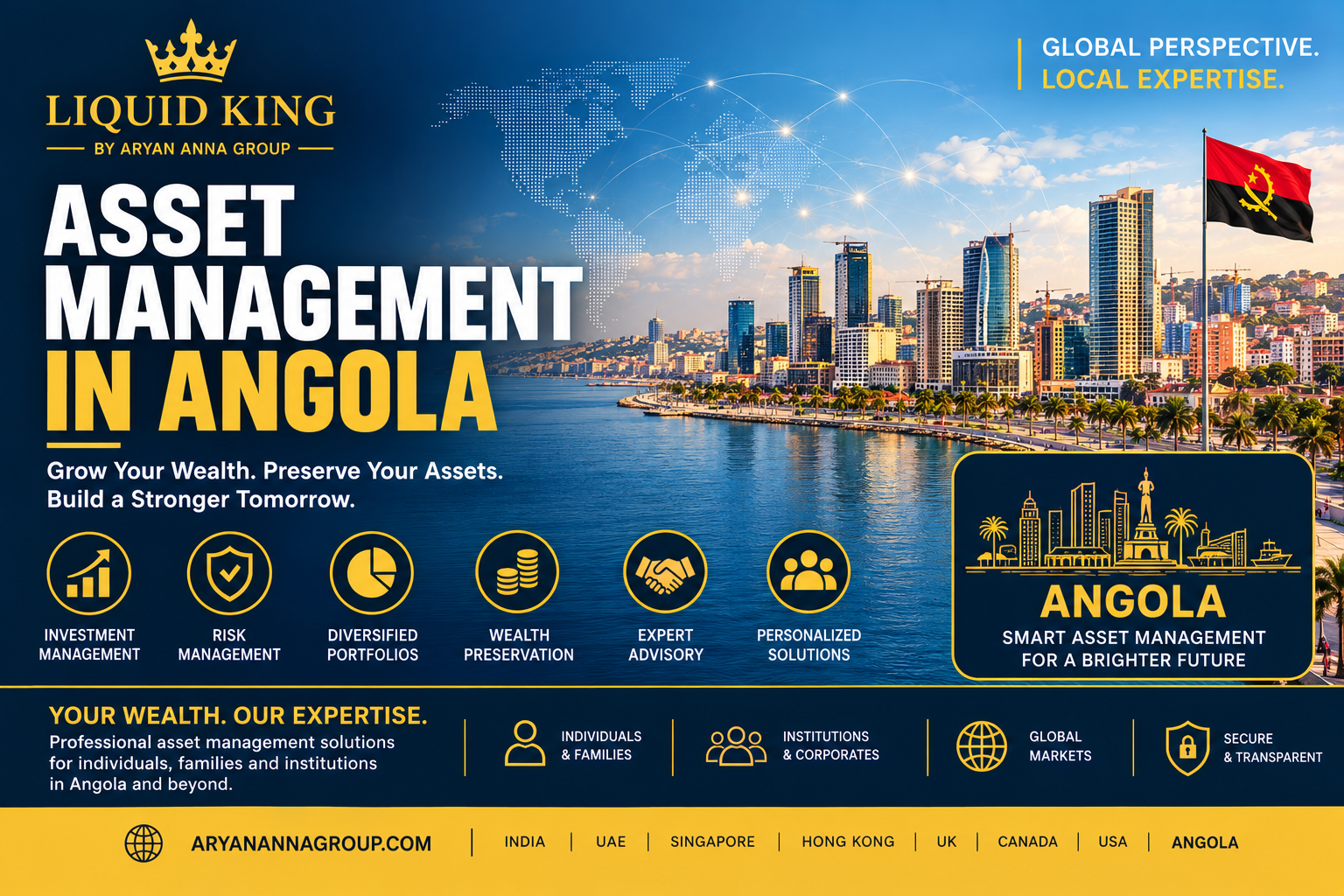
Table of Contents
An Asset Management Company in Angola can play an important role in helping individuals, businesses and institutions manage capital, investments and long-term financial objectives. As Angola continues developing its financial sector and diversifying its economy, professional approaches to investment and portfolio management are becoming increasingly relevant.
Asset management generally involves managing money and investments on behalf of clients according to defined objectives, risk considerations and investment strategies. Depending on the organization and applicable regulations, services may include portfolio management, investment advisory, wealth management, capital allocation and related financial solutions.
Angola's financial market is evolving alongside broader efforts to improve financial inclusion, strengthen financial-sector infrastructure and support private-sector development. These developments create an environment in which professional investment management can become increasingly relevant to investors seeking structured approaches to managing capital.
Angola's Growing Financial and Investment Environment
Angola has historically had a financial system strongly influenced by its banking sector and the country's commodity-based economy. Economic diversification has increasingly become an important policy objective, creating opportunities across areas such as agriculture, infrastructure, manufacturing, energy and services.
For asset managers, these developments can create both opportunities and considerations.
Investment decisions in Angola may require an understanding of:
- Local economic conditions
- Currency and inflation considerations
- Interest-rate movements
- Regulatory requirements
- Sector-specific risks
- Liquidity
- Corporate governance
- Political and macroeconomic developments
- International investment conditions
A professional asset management approach therefore involves more than simply selecting individual investments. It requires understanding the client's objectives, assessing risk and constructing an appropriate investment strategy.
What Does an Asset Management Company in Angola Do?
An asset management company generally manages investment assets or provides investment-related services for individuals, companies or institutional clients.
The exact services offered depend on the firm's structure, licenses and regulatory permissions.
Common asset management activities can include:
Portfolio Management
Portfolio management involves selecting and monitoring investments according to an agreed investment strategy. The portfolio may contain different asset classes depending on the client's objectives and applicable regulations.
Investment Advisory
Investment advisory services can help clients understand investment opportunities, risks and portfolio considerations before making investment decisions.
Wealth Management
Wealth management takes a broader view of an individual's or family's financial position. It can combine investment management with financial planning and other wealth-related services.
Institutional Asset Management
Institutional investors may require professional management of larger pools of capital. Their objectives can include capital preservation, income generation, liquidity management and long-term growth.
Capital Allocation
Professional managers can help clients determine how available capital should be allocated across different investment opportunities while considering risk and liquidity requirements.
Investment Opportunities in Angola
Angola's economic diversification creates potential investment opportunities across multiple sectors. However, the suitability of any investment depends on factors such as the investor's objectives, risk tolerance, time horizon and applicable regulations.
Potential areas of economic activity include:
- Energy and natural resources
- Agriculture and agribusiness
- Infrastructure
- Construction
- Financial services
- Telecommunications
- Manufacturing
- Logistics
- Retail and consumer businesses
- Technology and digital services
The presence of an economic opportunity does not necessarily mean that a particular investment will be successful. Asset managers therefore need to evaluate the underlying business, market conditions, financial structure and associated risks.
Why Professional Asset Management Matters
Managing investments independently can become increasingly complex as the size and diversity of a portfolio grows.
A professional asset management approach can provide several structural benefits.
Structured Investment Strategy
A clearly defined investment strategy can establish objectives, asset allocation parameters, risk limits and portfolio-monitoring processes.
Diversification
Diversification can help reduce dependence on a single investment, sector or asset class. The appropriate level of diversification depends on the investor's circumstances and investment objectives.
Risk Management
Asset managers typically evaluate different forms of investment risk, including market, credit, liquidity, currency and concentration risk.
Ongoing Portfolio Monitoring
Investment markets change continuously. Regular monitoring allows portfolios to be reviewed against their objectives and relevant market developments.
Professional Research
Asset managers may use financial analysis, economic research and market data to evaluate investment opportunities and risks.
Asset Management and Wealth Management in Angola
Asset management and wealth management are closely related but are not necessarily identical.
Asset management generally focuses on managing an investment portfolio or pool of assets.
Wealth management can involve a broader range of financial considerations, potentially including investment management, financial planning, succession considerations and other wealth-related services.
For high-net-worth individuals and business owners in Angola, a broader wealth-management approach may be relevant when financial assets form only one component of their overall wealth.
A professional provider should clearly explain which services it is authorized and equipped to provide rather than using the terms interchangeably.
Technology and the Future of Asset Management
Technology is changing how financial services are delivered around the world, and Angola is also developing its digital financial ecosystem.
Digital platforms can support areas such as:
- Client onboarding
- Portfolio reporting
- Investment research
- Digital payments
- Financial data analysis
- Risk monitoring
- Client communication
- Portfolio administration
Artificial intelligence and data analytics are also being incorporated into financial workflows internationally. These technologies can assist with data processing and analysis, although technology does not eliminate investment risk or replace appropriate governance and professional oversight.
For asset management companies operating in Angola, technology can potentially improve efficiency while making financial services more accessible to a broader group of clients.
Regulatory Considerations for Asset Management in Angola
Regulation is a critical consideration when evaluating an asset management company in Angola.
Financial services providers must operate according to the legal and regulatory framework applicable to their specific activities. Depending on the service, relevant requirements may involve licensing, investor protection, reporting, governance, anti-money-laundering procedures and other compliance obligations.
Potential clients should therefore verify:
- The company's legal identity
- Applicable regulatory authorization
- The specific services it is permitted to provide
- Fee structures
- Client agreements
- Custody arrangements
- Reporting procedures
- Risk disclosures
- Complaint and dispute-resolution mechanisms
These checks are particularly important when considering cross-border investment services.
Choosing an Asset Management Company in Angola
Selecting an asset management provider requires careful due diligence.
Rather than focusing only on expected returns, investors should evaluate the complete service and risk framework.
Important questions can include:
- 1. What services does the company provide?
- 2. Which clients does it serve?
- 3. What regulatory permissions apply to its activities?
- 4. How are investment decisions made?
- 5. How are risks monitored?
- 6. What fees and expenses apply?
- 7. How frequently are portfolios reported?
- 8. Who holds or safeguards client assets?
- 9. What are the liquidity and withdrawal conditions?
- 10. How are conflicts of interest managed?
A transparent provider should be able to explain its investment approach, fees, risks and operational structure clearly.
The Role of Asset Management in Angola's Economic Development
A stronger investment-management ecosystem can contribute to the development of capital markets by connecting available capital with investment opportunities.
Professional investment management can potentially support businesses seeking capital, investors seeking structured exposure to markets and institutions managing long-term financial resources.
This becomes particularly relevant as Angola seeks to expand economic activity beyond traditional sectors.
A deeper financial ecosystem can involve several participants, including:
- Commercial banks
- Investment firms
- Asset managers
- Pension funds
- Insurance companies
- Institutional investors
- Private businesses
- Government institutions
- Individual investors
The development of these interconnected participants can support greater sophistication in the country's financial markets.
Future Outlook for Asset Management in Angola
The future development of asset management in Angola will depend on several factors, including economic diversification, capital-market development, regulatory reforms, digitalization and investor participation.
Greater access to reliable financial information and investment products could encourage more structured approaches to wealth and capital management.
At the same time, asset managers will need to address the practical challenges associated with operating in an emerging financial market. These may include liquidity, currency exposure, market depth, regulatory compliance and access to high-quality investment information.
The long-term development of the sector is therefore likely to depend not only on investment opportunities but also on improvements in market infrastructure, transparency, governance and investor confidence.
Conclusion
An Asset Management Company in Angola can provide professional investment and portfolio-management capabilities for individuals, businesses and institutions seeking structured approaches to managing capital.
As Angola develops its financial sector and pursues economic diversification, asset management can become increasingly relevant to the efficient allocation of capital. However, investors should evaluate providers based on their regulatory position, investment methodology, risk-management processes, fees, transparency and service structure.
Professional asset management should ultimately be approached as a long-term financial discipline rather than simply a search for higher returns.
Financial Disclaimer
This article is for general informational purposes only and does not constitute investment, financial or legal advice. Investments involve risk, and past performance does not guarantee future results. Investors should conduct appropriate due diligence and consult qualified financial or legal professionals before making investment decisions.