
Asset Management Company in Armenia: Understanding Investment Management and Capital Allocation
Explore asset management in Armenia, including portfolio management, investment funds, asset allocation, risk management and regulatory developments.
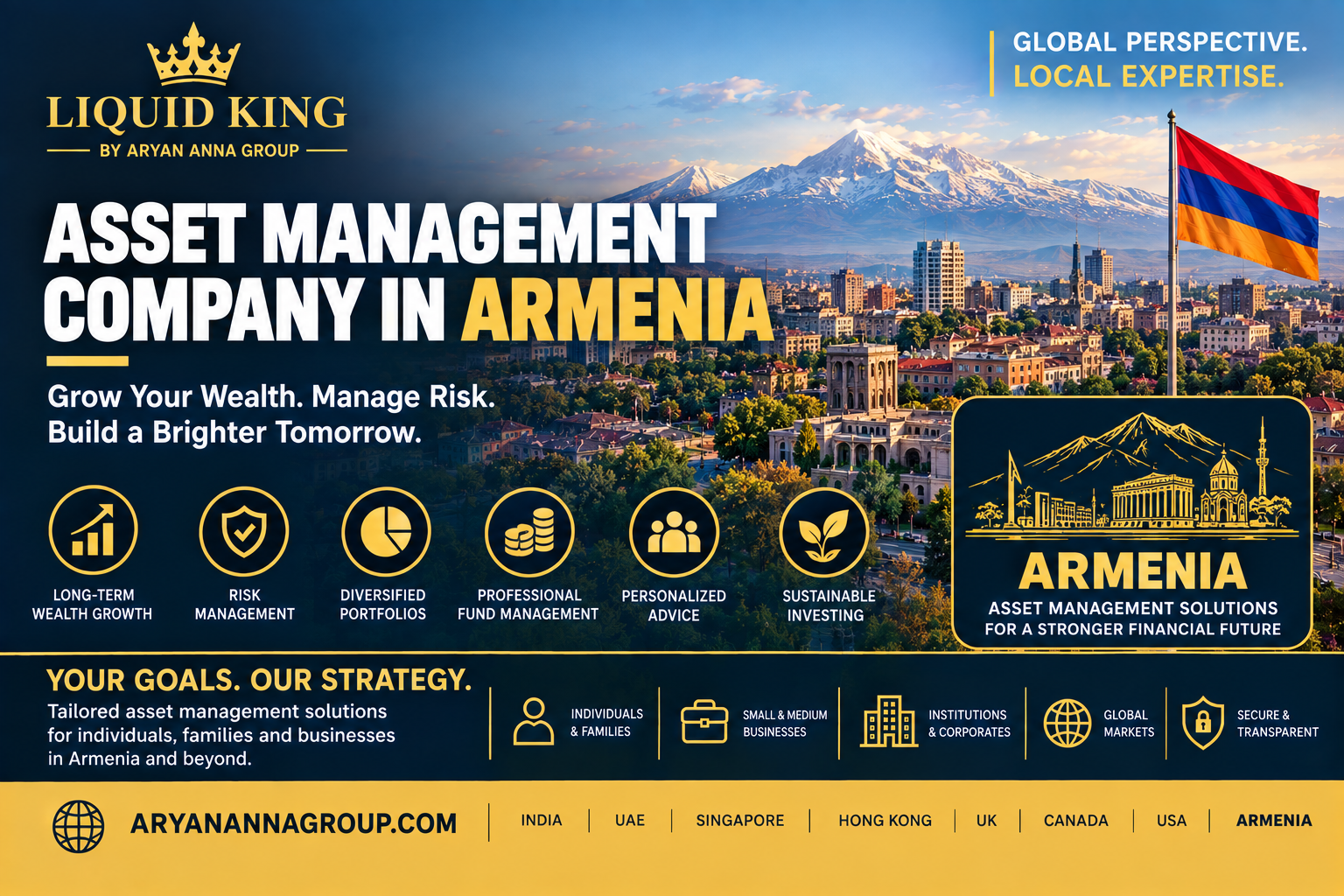
Table of Contents
An Asset Management Company in Armenia can help individuals, businesses and institutional investors manage financial assets through structured investment strategies, portfolio management and risk-management processes. Asset management generally involves deciding how capital should be allocated, monitoring investments and adjusting portfolios according to defined objectives and risk parameters.
Armenia has a regulated investment-services and fund-management sector overseen by the Central Bank of the Republic of Armenia (CBA). Investment services can be provided by licensed investment companies and banks, while investment fund managers can provide certain additional services with the appropriate CBA permission.
The country's investment-management sector continues to develop. The CBA's current investment-fund framework includes public and non-public funds, while regulatory decisions during 2026 have addressed fund structures and the operations of several asset-management and investment-management companies.
For investors considering professional asset management, understanding the services offered, regulatory status, investment strategy, fees, custody arrangements and risk controls is essential.
Understanding Asset Management in Armenia
Asset management is the professional management of financial assets on behalf of clients or investment vehicles.
Depending on the provider's authorization and business model, asset-management services may include:
- Portfolio management
- Investment advisory
- Asset allocation
- Investment-fund management
- Securities research
- Risk management
- Institutional investment management
- Liquidity management
- Pension-fund management
- International investment management
The exact scope of services varies between providers. In Armenia, the CBA explains that investment companies are licensed to provide investment services, while banks can provide investment services without obtaining a separate investment-company license. Fund-management companies may also provide certain investment services when they have the required permission.
This distinction is important because the term "asset management" can describe different activities depending on the legal and regulatory structure of a company.
Armenia's Asset Management and Investment Market
Armenia's financial market includes banks, investment companies, investment funds and licensed fund managers.
The CBA regulates investment-service providers and maintains information on investment funds and fund managers. Investment companies can provide services such as portfolio management, brokerage-related activities and investment advice, subject to the services covered by their licenses.
Investment fund managers have a separate regulatory framework. The CBA describes an investment fund manager as a company registered and licensed by the Central Bank to manage the assets of an investment fund. With appropriate additional permissions, a fund manager can also manage pension funds, provide investment advice, hold certain fund assets in custody and manage securities portfolios.
This regulatory structure provides an important foundation for professional asset management in Armenia.
Key Services Offered by an Asset Management Company in Armenia
Portfolio Management
Portfolio management involves constructing, monitoring and adjusting a portfolio according to an agreed investment strategy.
Managers may evaluate securities based on factors such as expected return, valuation, liquidity, credit quality, market conditions and portfolio concentration.
The portfolio should be aligned with the client's objectives rather than built around a single investment product.
Asset Allocation
Asset allocation determines how capital is distributed among different asset classes.
Depending on the mandate, an asset manager may consider:
- Equities
- Government securities
- Corporate bonds
- Investment funds
- Cash and cash equivalents
- Real estate-related investments
- Domestic securities
- International assets
The appropriate allocation depends on factors such as investment horizon, liquidity requirements, risk tolerance and financial objectives.
Investment Advisory
Investment advisory services can provide research and analysis to help clients evaluate investment opportunities.
The CBA identifies investment advice and research among the services that investment-service providers can offer.
Advisory arrangements can be particularly relevant for investors who want professional research while retaining control over individual investment decisions.
Investment Fund Management
An asset management company operating as a licensed investment fund manager may manage collective investment vehicles.
The CBA explains that investment funds pool money from investors and have their assets managed by professionals according to the objectives of the relevant fund. Armenian legislation provides for different types of investment funds with distinct structures and investment strategies.
Investment Funds in Armenia
Investment funds are an important part of Armenia's asset-management ecosystem.
The CBA's current list includes public funds such as the CAM Government Securities Investment Fund, CQ Armenia Growth public open standard contractual investment fund, Limitless Prime public open investment hedge fund and Limitless Growth public open standard investment fund.
The market also includes non-public investment funds. During 2026, the CBA registered changes involving several such funds.
For example, on August 25, 2026, the CBA registered a new edition of the rules of the Ashtarak II Non-Public Contractual Investment Fund managed by Strategist Asset Management.
On September 8, 2026, the CBA registered changes to the Growth Land Nonpublic Investment Fund, including its change to the Growth Land Nonpublic Investment Fund of Hokay Capital Asset Management LLC.
These regulatory decisions illustrate the continuing activity within Armenia's investment-fund market.
Investors should nevertheless review each fund's offering documents, investment strategy, fees, liquidity terms and risk disclosures before investing.
Asset Management for Institutional Investors
Professional asset management can be relevant to institutions that manage substantial pools of capital.
Institutional investors can have different requirements from individual investors, particularly concerning governance, liquidity, reporting and investment restrictions.
Institutional asset-management mandates may include:
- Portfolio construction
- Investment-policy implementation
- Risk monitoring
- Liquidity management
- Performance reporting
- Investment research
- Asset allocation
- Regulatory reporting
Institutional clients may also require investment managers to follow formal investment guidelines covering permitted assets, concentration limits, risk exposure and reporting frequency.
Asset Management for Businesses and Entrepreneurs
Companies and entrepreneurs may also require professional management of surplus capital or investment reserves.
A business may hold excess liquidity that needs to remain accessible while also being managed according to the company's financial objectives.
Asset management can therefore form part of broader corporate financial planning involving:
- Corporate investment reserves
- Liquidity management
- Capital allocation
- Business-owner diversification
- Long-term financial planning
- Succession considerations
Entrepreneurs should distinguish between operating capital and long-term investment capital. Funds required for payroll, working capital or near-term business obligations may have different liquidity requirements from capital intended for longer-term investment.
Diversification and Risk Management
Diversification is a fundamental component of professional portfolio management.
Concentration in a single company, asset class, sector or geographic market can expose an investor to risks that may be reduced through broader diversification. However, diversification does not eliminate investment risk.
An asset manager may monitor:
Market Risk
Changes in securities prices can affect portfolio values.
Credit Risk
Fixed-income investments can be affected by the ability of an issuer or borrower to meet its obligations.
Liquidity Risk
Some investments may be difficult to sell quickly without affecting their price.
Currency Risk
International investments can create exposure to movements between currencies.
Concentration Risk
Large exposure to a particular company, sector or asset class can increase portfolio sensitivity to specific events.
A professional risk-management process should identify relevant exposures and monitor them against the investment mandate.
Technology and Modern Asset Management in Armenia
Technology is increasingly important in investment management.
Digital systems can support:
- Portfolio monitoring
- Client reporting
- Risk analysis
- Investment research
- Digital onboarding
- Financial-data management
- Performance analysis
- Secure document management
Technology can improve access to information and streamline investment operations, but it does not remove the need for human oversight, governance and appropriate risk controls.
Armenia's investment-services market also continues to see regulatory activity. In April 2026, the CBA registered a change in the management of Aktina Capital Investment Firm LLC, while in May it registered a management change at General Asset Management CJSC.
These decisions are examples of the CBA's ongoing supervision of investment-sector organizations.
Regulatory Framework for Asset Management in Armenia
Regulation is one of the most important factors when evaluating an asset management company.
The CBA states that investment companies must be licensed to provide investment services and can only provide the investment services covered by their licenses. Additional investment services generally require the relevant additional authorization.
For investment fund managers, the CBA establishes requirements covering areas such as legal structure, technical resources, statutory capital, business planning and significant participation. Fund managers are also subject to activity regulation and supervision designed to protect investors and maintain financial-market integrity.
The regulatory framework also addresses internal controls and risk management. In January 2026, the CBA adopted amendments to minimum requirements for the internal-control and risk-management systems of fund managers, including measures concerning the management of risks associated with circumvention of international sanctions.
For investors, this makes regulatory verification an important part of due diligence.
How to Evaluate an Asset Management Company in Armenia
Before engaging an asset manager, investors should review several areas.
Verify Licensing and Authorization
Check the company's legal status and determine whether it is licensed or authorized for the services it offers.
The CBA publishes information about investment-service providers and licensed investment fund managers that can be used as part of the verification process.
Understand the Investment Strategy
Investors should understand how the manager selects investments, determines asset allocation and responds to changing market conditions.
Review Fees
Costs can include management fees, advisory fees, transaction expenses, custody charges, fund expenses and other administrative costs.
Examine Custody Arrangements
Understand where investment assets are held and which entity is responsible for custody and administration.
Review Reporting
Investors should receive clear information about holdings, performance, fees, risks and material portfolio changes.
Assess Liquidity
Determine how quickly investments can be redeemed or sold and whether restrictions apply.
International Asset Management and Cross-Border Investment
International diversification can provide investors with access to markets outside Armenia.
However, cross-border asset management introduces additional considerations, including:
- Foreign-exchange exposure
- International taxation
- Regulatory requirements
- Custody arrangements
- Cross-border reporting
- Settlement procedures
- Investment restrictions
- Jurisdictional risks
Investors should understand which entities are providing services in each jurisdiction and whether they are appropriately authorized.
Where international structures involve significant tax, legal or ownership implications, independent professional advice may be appropriate.
Future of Asset Management in Armenia
Armenia's asset-management sector is continuing to develop through investment-fund activity, investment-company regulation and the expansion of professional financial services.
The CBA's current framework includes both public and non-public investment funds and licensed fund managers. Recent 2026 regulatory decisions also show continuing activity involving fund rules, management structures and permissions for investment-fund operations.
Several areas are likely to remain important for the sector:
- Development of investment funds
- Digital portfolio management
- Institutional investment services
- Improved investment reporting
- Risk-management systems
- Diversified investment strategies
- Cross-border investment
- Continued regulatory development
As investment products and financial technologies develop, investors will still need to evaluate suitability, risk, costs and regulatory status on an individual basis.
Conclusion
An Asset Management Company in Armenia can provide professional investment management, portfolio construction, asset allocation, investment advisory and risk-management services, depending on its regulatory authorization and business model.
Armenia has a structured regulatory framework overseen by the Central Bank of Armenia. Licensed investment companies and investment fund managers operate within defined regulatory requirements, while the country's investment-fund market includes both public and non-public investment vehicles.
Recent CBA decisions in 2026 involving investment funds and asset-management organizations demonstrate continuing activity within the sector.
For investors considering professional asset management, key areas of due diligence include licensing, investment strategy, diversification, fees, custody, liquidity, reporting and risk-management procedures.
Financial Disclaimer: This article is for general informational purposes only and does not constitute financial, investment, legal or tax advice. Investments involve risk, and past performance does not guarantee future results. Readers should conduct appropriate due diligence and consult appropriately qualified financial, legal or tax professionals before making investment decisions.