
Asset Management Company in Los Angeles | Investment Guide
Explore asset management companies in Los Angeles, their services, investment approaches, market trends, and key factors to consider.
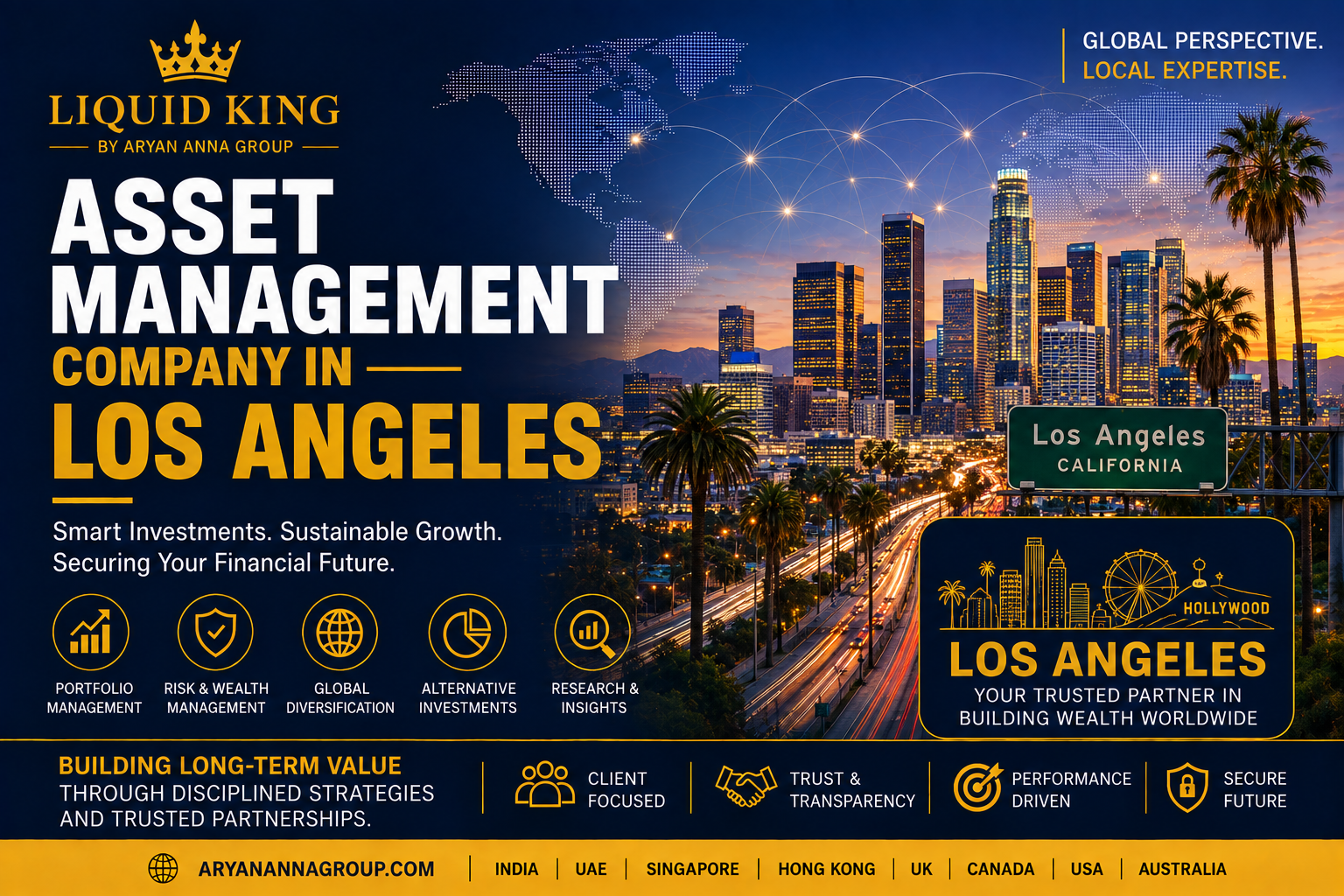
Table of Contents
Los Angeles is one of the major financial and investment centers in the United States, with a diverse ecosystem of asset managers, investment advisers, private equity firms, real estate investors, and wealth management companies. The city provides access to a broad range of investment strategies serving individuals, businesses, institutions, and high-net-worth investors.
An Asset Management Company in Los Angeles can help clients manage investment portfolios, allocate capital across different asset classes, evaluate risk, and develop long-term investment strategies. The local market includes firms specializing in traditional equities and fixed income as well as alternative investments such as private equity, real estate, credit, and infrastructure.
Asset Management Market in Los Angeles
Los Angeles has a well-developed investment management ecosystem. Publicly available industry directories identify hundreds of investment management businesses operating in the Los Angeles market. (seamless.ai)
The city's investment landscape includes firms with different areas of specialization, including:
- Equity portfolio management
- Fixed-income investments
- Alternative investments
- Private equity
- Real estate
- Credit strategies
- Institutional investment management
- Wealth and portfolio management
- Quantitative investment strategies
The Los Angeles City Employees' Retirement System and other institutional investors have historically worked with managers across multiple asset classes, demonstrating the depth and diversity of the regional investment-management ecosystem. (LAFPP)
What Does an Asset Management Company in Los Angeles Do?
An asset management company generally manages investment assets on behalf of clients according to defined objectives, risk parameters, and investment mandates.
Depending on the firm, services may include:
Portfolio Management
Investment professionals construct and monitor portfolios based on the client's objectives, time horizon, liquidity requirements, and risk tolerance.
Investment Research
Asset managers conduct research on companies, markets, industries, economic conditions, and other factors that may influence investment decisions.
Risk Management
Risk assessment is an important part of professional asset management. Managers may evaluate portfolio concentration, market exposure, liquidity, credit risk, and other potential risks.
Alternative Investments
Some Los Angeles investment firms focus on alternative asset classes, including private equity, private credit, real estate, and infrastructure.
Institutional Asset Management
Large asset managers may serve pension funds, foundations, endowments, corporations, and other institutional investors.
Leading Asset Management Firms and Investment Managers in Los Angeles
Los Angeles has a number of established investment-management organizations with different investment approaches.
- Camden Asset Management LP is an investment-management business located on Santa Monica Boulevard.
- SSI Investment Management, LLC operates from Century City and focuses on investment management.
- AMI Asset Management is another investment company located in Los Angeles.
- Ocean Park Asset Management, LLC is based nearby in Santa Monica.
Beyond local firms, Los Angeles is home to major investment organizations. Los Angeles Capital Management, for example, describes itself as a global quantitative equity manager and reported $34.3 billion in firmwide assets under management as of June 30, 2026. (lacapm.com)
The broader market also includes major alternative investment managers. Ares Management, headquartered in Los Angeles, operates across areas including credit, private equity, real estate, and infrastructure. (Investor's Business Daily)
Key Asset Classes Managed in Los Angeles
Equities
Equity management involves investing in publicly traded companies. Managers may use fundamental, quantitative, factor-based, or other investment approaches.
Los Angeles has a significant presence in quantitative investment management. Los Angeles Capital Management, for example, focuses on quantitative equity strategies using research and technology. (lacapm.com)
Fixed Income
Fixed-income strategies may include government securities, corporate bonds, credit instruments, and other debt investments. These strategies can be designed around income generation, capital preservation, diversification, or specific risk objectives.
Private Equity
Private equity managers invest in privately held businesses and may provide capital for growth, acquisitions, restructuring, or other strategic purposes.
Real Estate
Real estate is another important component of the Los Angeles investment landscape. Strategies can include direct property investments, real estate funds, REITs, and other real estate-related securities.
Alternative Investments
Alternative asset management may include private credit, infrastructure, hedge funds, commodities, and other non-traditional investment strategies.
How to Choose an Asset Management Company in Los Angeles
Choosing an asset manager requires more than comparing investment performance. Investors should evaluate the firm's approach, regulatory status, fees, services, and suitability for their objectives.
Important considerations include:
- <strong>Investment strategy:</strong> Understand how the company selects investments and manages portfolios.
- <strong>Track record:</strong> Review historical performance over appropriate time periods, while recognizing that past performance does not guarantee future results.
- <strong>Fees:</strong> Understand management fees, performance fees, transaction costs, and any other applicable charges.
- <strong>Risk management:</strong> Ask how the firm identifies, measures, and manages investment risk.
- <strong>Regulatory status:</strong> Verify applicable registrations, licenses, and regulatory information.
- <strong>Client type:</strong> Determine whether the company primarily serves individuals, businesses, institutions, or high-net-worth investors.
- <strong>Transparency:</strong> Clear reporting and communication can make it easier to understand portfolio activity and investment decisions.
Technology and Innovation in Asset Management
Technology continues to influence investment management. Asset managers increasingly use quantitative models, data analytics, portfolio-management systems, automation, and artificial intelligence to support research and decision-making.
Quantitative investment firms in Los Angeles demonstrate how technology and investment research can be integrated into portfolio construction. Los Angeles Capital Management, for instance, highlights research and technology as central components of its investment approach. (lacapm.com)
However, technology does not eliminate investment risk. Models depend on the quality of their data, assumptions, and implementation, while market conditions can change unexpectedly.
Asset Management vs. Wealth Management
Asset management and wealth management are related but are not identical.
Asset management primarily focuses on managing investments and portfolios.
Wealth management generally takes a broader approach and may combine investment management with financial planning, retirement planning, estate considerations, tax planning, and other services.
For example, an investor looking specifically for professional portfolio management may focus on asset management firms, while an individual seeking a broader financial-planning relationship may consider a wealth management firm.
Why Los Angeles Is an Important Investment Hub
Los Angeles offers several characteristics that support a strong investment-management industry:
- Large and diverse business community
- Significant private capital markets
- Strong real estate sector
- Access to technology and innovation
- Established institutional investors
- Growing alternative-investment ecosystem
- Presence of major investment firms
The city's investment sector therefore extends well beyond conventional stock and bond management. It includes a wide range of strategies designed for different investment objectives and client requirements.
Future Outlook for Asset Management in Los Angeles
The asset management industry in Los Angeles is likely to continue evolving alongside broader changes in global financial markets.
Several areas are particularly important:
- Greater use of data analytics and artificial intelligence
- Continued demand for alternative investments
- Increased focus on portfolio risk management
- Growth of customized investment solutions
- Greater emphasis on transparency and regulatory compliance
- Continued integration of technology into investment research
The recent expansion and consolidation occurring across the broader asset-management industry also illustrates the importance of scale, investment capabilities, distribution, and specialized expertise. (Reuters)
For investors, the most important consideration will remain selecting an investment manager whose strategy, risk framework, costs, and services are appropriate for their individual circumstances.
Conclusion
An Asset Management Company in Los Angeles can provide professional investment management across equities, fixed income, real estate, private markets, credit, and other asset classes. The city's mature financial ecosystem offers investors access to both specialized investment managers and large global firms.
Before selecting an asset manager, investors should conduct appropriate due diligence, review regulatory information, understand fees and risks, and ensure that the firm's investment approach aligns with their objectives and time horizon.
Financial Disclaimer
Investment values can rise or fall, and investing involves risk. Past performance is not a guarantee of future results. This article is for general informational purposes and should not be considered personalized financial or investment advice.