
Wealth Management Company in Florida | Wealth Guide
Learn how a wealth management company in Florida helps individuals and families with investment planning, portfolio management, risk management, and long-term wealth goals.
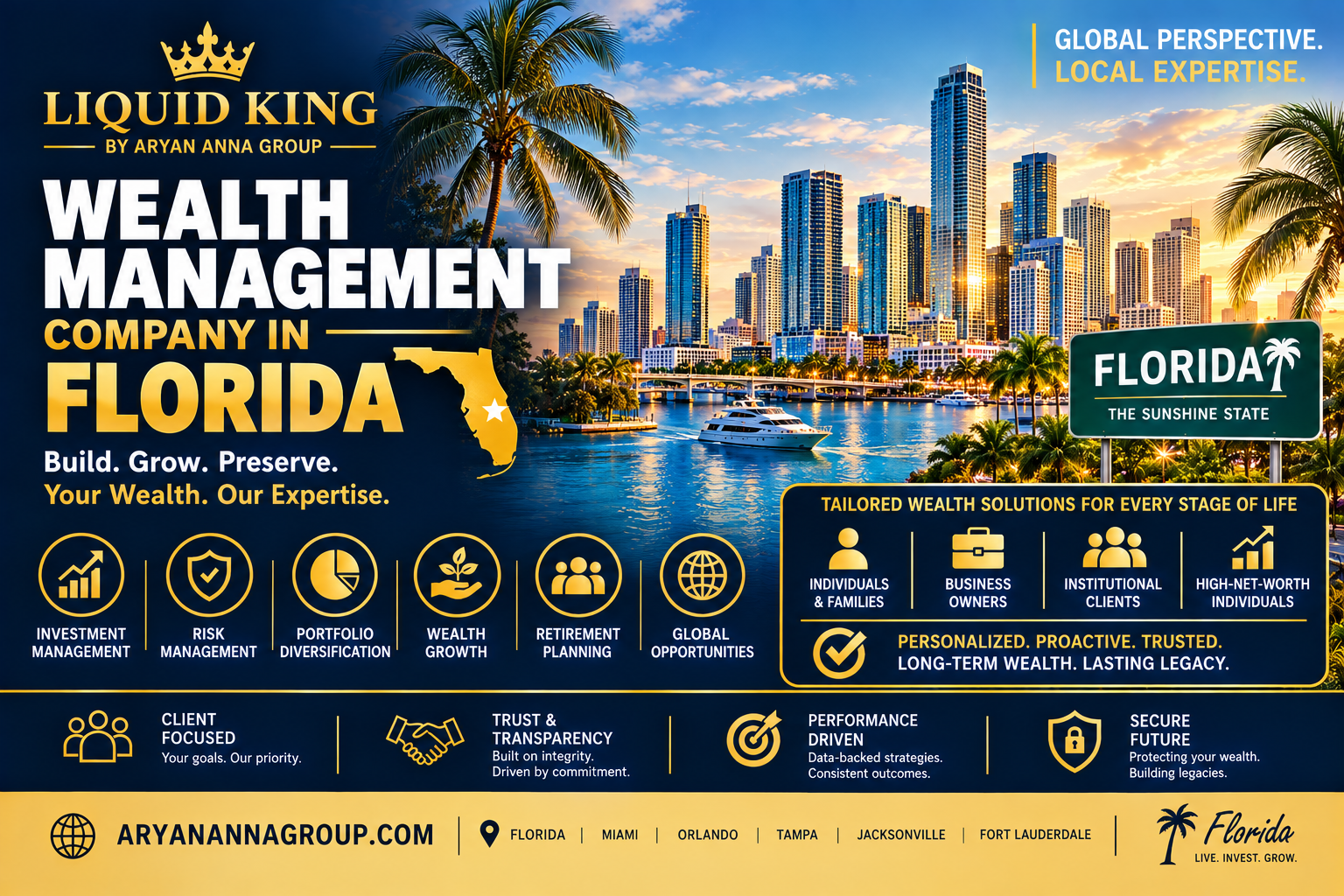
Table of Contents
A Wealth Management Company in Florida can help individuals, families, business owners, and high-net-worth investors take a structured approach to managing and preserving their wealth. Wealth management generally combines investment management with broader financial planning, risk assessment, tax considerations, retirement planning, and long-term financial objectives.
Florida has a diverse economy and a large financial services sector, with established activity in cities and communities such as Miami, Tampa, Orlando, Jacksonville, Fort Lauderdale, Naples, and Palm Beach. The state's business environment and growing population have also contributed to demand for professional financial and wealth-related services.
Effective wealth management is not simply about choosing investments. It involves understanding a client's financial position, objectives, liquidity requirements, risk tolerance, family circumstances, and long-term plans. A professional wealth management approach can bring these different considerations together within a coordinated financial strategy.
For investors and families evaluating wealth management services, understanding what these companies do and how to select an appropriate provider is an important part of the decision-making process.
What Does a Wealth Management Company in Florida Do?
A wealth management company typically provides a combination of financial and investment services designed to help clients manage their wealth over time.
Depending on the firm and the client's needs, services may include:
- Investment portfolio management
- Financial planning
- Retirement planning
- Asset allocation
- Risk management
- Estate planning coordination
- Tax-aware investment planning
- Cash-flow planning
- Business-owner financial planning
- Wealth preservation strategies
- Portfolio reporting and monitoring
The exact services offered vary between firms. Investors should understand which services are included and which require separate professional advisers.
Wealth management is generally most effective when financial decisions are considered together rather than treated as isolated activities.
Why Florida Investors Consider Professional Wealth Management
Managing significant financial assets can become increasingly complex as wealth grows. Multiple investment accounts, businesses, real estate holdings, retirement assets, and family financial responsibilities can make financial decision-making more difficult.
A professional wealth management relationship can provide several potential advantages.
Coordinated Financial Planning
A wealth manager can help organize different areas of a client's financial life and establish a framework for long-term planning.
Investment Management
Professional investment management can involve portfolio construction, asset allocation, security selection, diversification, and ongoing monitoring.
Risk Management
Wealth planning should consider potential risks to both investments and personal financial objectives. These may include market volatility, concentration risk, liquidity risk, inflation, interest-rate changes, and other factors.
Long-Term Planning
A structured wealth strategy can help investors focus on long-term objectives rather than reacting to short-term market movements.
Ongoing Review
Financial circumstances can change because of business developments, retirement, family events, changes in income, or changes in financial markets. Regular reviews allow a strategy to be adjusted when appropriate.
Key Services Offered by Wealth Management Companies
The scope of wealth management differs from one organization to another. Investors should evaluate the services based on their individual requirements.
Investment Portfolio Management
Portfolio management is a central component of many wealth management relationships. A manager may construct portfolios across equities, fixed income, real estate, alternative investments, and other eligible assets.
The investment strategy should reflect the client's risk tolerance, financial objectives, investment horizon, and liquidity requirements.
Retirement Planning
Retirement planning involves estimating future financial requirements and considering how investment assets, income sources, expenses, and withdrawal strategies may interact.
For individuals approaching retirement, maintaining an appropriate balance between growth potential, income needs, liquidity, and risk can become particularly important.
Estate Planning Coordination
Wealth management can also involve coordinating investment decisions with broader estate planning objectives. Wealth managers may work alongside qualified attorneys and tax professionals where specialized legal or tax advice is required.
Tax-Aware Investment Planning
Taxes can affect investment outcomes and wealth-transfer strategies. A wealth manager may consider tax implications when evaluating portfolio decisions, although tax advice should be obtained from appropriately qualified tax professionals.
Cash-Flow Planning
Cash-flow management can help clients understand how income, expenses, investments, debt, and liquidity interact.
This can be especially relevant for business owners, retirees, and individuals with variable income.
Investment Strategies Used in Wealth Management
A wealth management company in Florida may use different investment approaches depending on client objectives and market conditions.
Diversified Portfolios
Diversification can involve spreading investments across asset classes, sectors, industries, and geographic markets. It can reduce reliance on a single investment or market, although diversification cannot eliminate investment risk.
Growth-Oriented Strategies
Growth-oriented portfolios generally emphasize investments with greater potential for capital appreciation. They may also involve higher levels of volatility and investment risk.
Income-Oriented Strategies
Income-focused approaches may emphasize assets capable of generating interest, dividends, rental income, or other forms of cash flow.
Capital Preservation
Some investors prioritize protecting existing capital and maintaining liquidity. Such strategies may emphasize lower-volatility investments, although no investment strategy can guarantee the absence of losses.
Alternative Investments
Qualified investors may consider alternatives such as private equity, private credit, real estate, infrastructure, or hedge-fund strategies. These investments can involve additional complexity, limited liquidity, higher fees, and specialized risks.
The appropriate strategy depends on the investor's specific circumstances rather than simply the potential return of an individual investment.
Wealth Management for High-Net-Worth Individuals and Families
High-net-worth individuals and families can have financial requirements that extend beyond conventional portfolio management.
Their financial structure may include:
- Multiple investment portfolios
- Private businesses
- Commercial or residential real estate
- Retirement accounts
- Private-market investments
- Trust and estate structures
- Significant liquidity requirements
- Intergenerational wealth considerations
A wealth management strategy for such clients may therefore involve coordination between investment management, tax professionals, attorneys, insurance specialists, and other advisers.
The goal is generally to create a coordinated approach to managing, preserving, and transferring wealth while considering the client's broader financial objectives.
Wealth Management for Business Owners
Business owners often have a significant portion of their net worth connected to their company. This can create concentration and liquidity considerations.
Professional wealth planning can help business owners evaluate issues such as:
- Diversification outside the business
- Business and personal cash flow
- Retirement planning
- Liquidity requirements
- Business succession
- Investment portfolio construction
- Risk management
- Wealth-transfer objectives
Business owners should consider both the financial health of their company and their personal financial position when developing a long-term wealth strategy.
How to Choose a Wealth Management Company in Florida
Selecting a wealth management provider requires careful due diligence. Investors should evaluate the firm rather than relying solely on marketing claims or historical investment performance.
Understand the Company's Services
Determine whether the firm provides investment management, financial planning, retirement planning, estate-planning coordination, tax-aware planning, or other services relevant to your needs.
Review the Investment Philosophy
Ask how investment decisions are made and whether the firm uses active management, passive investing, strategic asset allocation, tactical allocation, quantitative strategies, or a combination of approaches.
Examine Fees
Understand management fees, fund expenses, transaction costs, performance-related fees, planning fees, and other charges that may apply.
Evaluate Conflicts of Interest
Investors should understand how the firm and its professionals are compensated and whether any potential conflicts of interest could influence recommendations.
Review Regulatory Information
Investors should verify applicable registration and regulatory information and review available disclosures before entering into an advisory relationship.
Consider Communication and Reporting
Clear reporting can help clients understand their portfolio, investment performance, fees, allocation, and changes in strategy.
Assess Liquidity
Investments differ considerably in liquidity. Before committing capital to private or alternative investments, investors should understand withdrawal restrictions and expected holding periods.
Technology in Modern Wealth Management
Technology has changed how wealth management firms communicate with clients and manage investment information.
Modern wealth management platforms may provide:
- Digital portfolio access
- Investment reporting
- Financial planning tools
- Portfolio analytics
- Risk monitoring
- Automated reporting
- Document management
- Secure digital communication
Technology can make financial information more accessible and improve operational efficiency. However, technology alone does not guarantee an appropriate investment strategy.
Human judgment, financial analysis, risk assessment, transparency, and client-specific planning remain important components of wealth management.
Florida's Wealth Management Landscape
Florida's financial services environment includes investment advisers, wealth management firms, banks, family offices, asset managers, financial planners, and other professional service providers.
The state also has a substantial population of retirees, entrepreneurs, business owners, professionals, and affluent households, creating varied financial planning requirements.
Wealth management providers may therefore specialize in different client segments. Some focus primarily on retirement planning, while others concentrate on investment management, business-owner planning, family wealth, institutional assets, or high-net-worth clients.
This diversity means investors should focus on finding a provider whose capabilities and service model align with their financial circumstances.
Wealth Management and Asset Management: What Is the Difference?
The terms wealth management and asset management are sometimes used interchangeably, but they can describe different scopes of service.
Asset management generally focuses on managing an investment portfolio and making decisions about how capital is allocated among investments.
Wealth management can take a broader approach by combining investment management with financial planning, retirement planning, estate-planning coordination, tax considerations, cash-flow planning, and other aspects of a client's financial life.
For investors with relatively straightforward investment needs, asset management may be sufficient. Individuals and families with more complex financial circumstances may benefit from a broader wealth management framework.
The appropriate service depends on the client's objectives and requirements.
Future of Wealth Management in Florida
The wealth management industry is evolving as technology, investor expectations, demographic changes, and financial markets develop.
Digital investment platforms, automated financial planning tools, data analytics, artificial intelligence, and improved portfolio reporting are likely to continue influencing the sector.
At the same time, investors may continue to value personalized financial planning, professional judgment, transparency, and ongoing communication.
Alternative investments and customized portfolio strategies may also remain relevant for investors who meet the applicable eligibility requirements and understand the associated risks.
The future of wealth management is therefore likely to combine technology-enabled services with professional financial planning and investment oversight.
Conclusion
A Wealth Management Company in Florida can help individuals, families, entrepreneurs, and high-net-worth investors develop a structured approach to investment management and broader financial planning. Services can include portfolio management, retirement planning, asset allocation, risk management, cash-flow planning, and coordination with other professional advisers.
Florida's diverse financial environment offers access to a wide range of wealth management providers and investment strategies. However, choosing a provider requires careful consideration of services, fees, investment philosophy, regulatory information, conflicts of interest, communication standards, and liquidity.
A successful wealth management strategy should be aligned with the client's objectives, financial circumstances, investment horizon, and tolerance for risk. Professional advice can support the decision-making process, but investors should remain informed and conduct appropriate due diligence.
Important Disclaimer: Investments involve risk, and the value of investments can rise or fall. Past performance does not guarantee future results. This article is provided for general educational and informational purposes and does not constitute personalized financial, investment, tax, or legal advice. Investors should conduct appropriate due diligence and consult qualified professionals where appropriate. Wealth management and investment advisory services should be evaluated according to applicable federal and Florida laws and regulations.